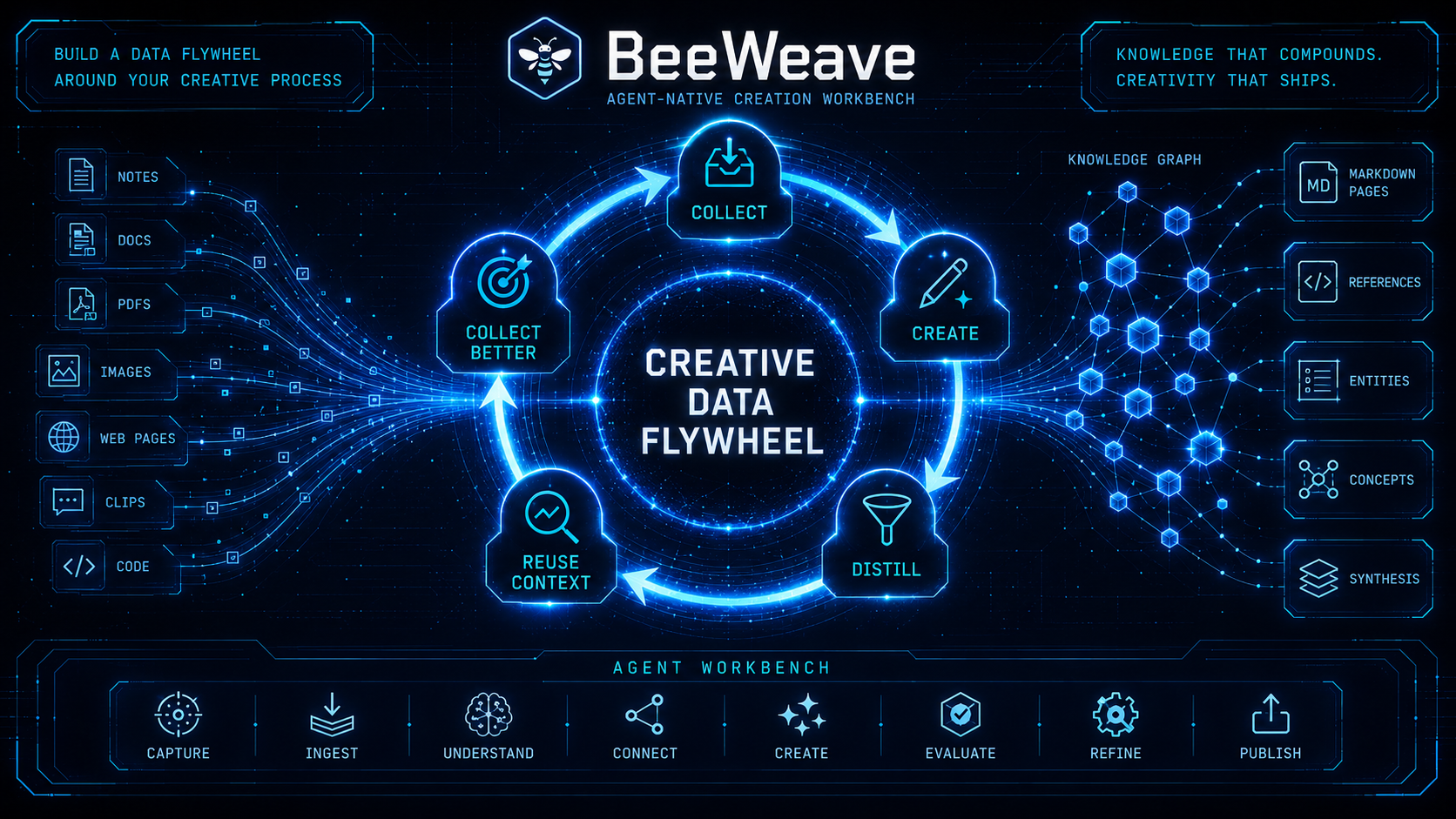
Data Flywheel
BeeWeave is designed as a loop, not a one-way archive.
1. Collect
Put raw material into workbench/: links, notes, PDFs, exported chats,
meeting transcripts, screenshots, product briefs, source files, and findings
from agent sessions.
2. Create
Use the workbench as the drafting surface. Writing and workbench skills can turn collected material into articles, social posts, research notes, specs, or project output while keeping the raw sources nearby.
3. Distill
After work is published or a decision becomes stable, ingest the high-signal output into the vault:
/beeweave-article-publisher workbench/articles/drafts/my-article.md
/beeweave-ingest workbench/articles/published
/beeweave-update
Use beeweave-article-publisher for finished article drafts: it moves one
draft to workbench/articles/published/, marks it published, and ingests that
file into the wiki. Use beeweave-ingest directly for folders or non-article
source material.
The vault should hold durable concepts, entities, references, synthesis notes, project decisions, and linked Markdown pages.
4. Reuse Context
Before the next task, query the vault so the agent starts from what you already know:
5. Collect Better and Create the Next Piece
Queries reveal gaps, drafts expose weak claims, and digests surface emerging themes. Use those signals to decide what to collect next and what to create from it.